Tomorrow's imaging machines are intelligent.
How artificial intelligence is turning CT, MRI, PET and ultrasound into increasingly autonomous partners for radiologists: the research behind it, the devices coming next and what it means for your practice.
On the market, coming soon and in development

NAEOTOM Alpha
Photon-counting CT platform

Revolution Apex
Wide-coverage CT with deep-learning reconstruction

Deep-silicon photon-counting CT (development programme)
Silicon-based photon-counting detector in development

uMR Jupiter 5T
Whole-body 5 T MRI

Photon-counting CT (research prototype)
Research-stage photon-counting CT

Iseult 11.7 T whole-body MRI
Research whole-body MRI at 11.7 T
Machines by company

Latest articles

Photon-counting CT: where the technology stands
Photon-counting detectors convert each X-ray photon directly into an electrical pulse and record its energy. Compared with conventional energy-integrating detectors,…

Helium-light MRI moves into the mainstream
Conventional superconducting MRI magnets hold large volumes of liquid helium, a finite resource with volatile pricing. Several manufacturers now offer sealed or…

Total-body PET and the growth of theranostics
Long axial field-of-view PET/CT systems, with detector rings covering a metre or more, increase sensitivity substantially compared with conventional scanners. United…
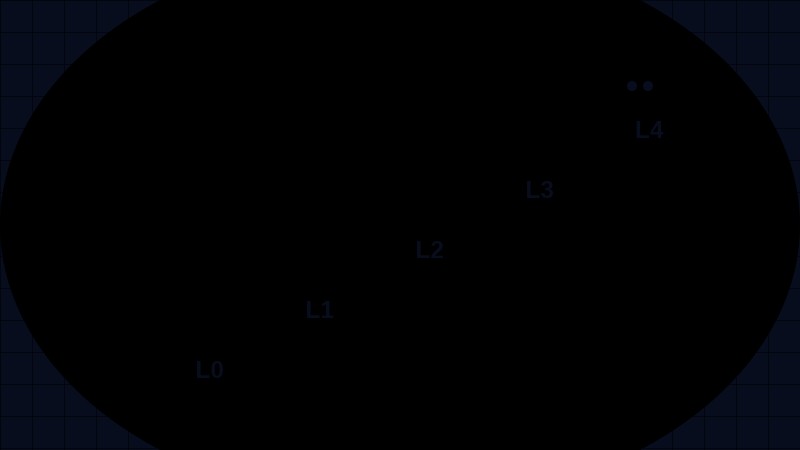
The autonomy ladder: from AI reconstruction to the self-driving scan
Most AI in imaging today sits at the 'assisted' level: deep-learning reconstruction, noise reduction and single-finding detection tools. A growing number of systems add…

Ultra-high field: what an 11.7 T human MRI teaches us
The Iseult project at CEA NeuroSpin in France operates a whole-body MRI magnet at 11.7 T for research, and reported first in-vivo human brain images in 2024. The work…

Seven questions to answer before buying your next scanner
1) Which clinical indications and patient volumes must the system support over the next seven to ten years? 2) What are your room, power, cooling and shielding…
From AI assistant to autonomous imaging robot
Scanners are gaining eyes (3D cameras), judgement (AI protocoling and quality control) and voice (draft reports). Our five-level framework shows where today's machines stand.
Explore the future


Dr. Swati Goyal
Academic radiologist · AI researcher · Author · Medical educator
A leading voice in India's effort to bring artificial intelligence into everyday radiology practice, combining clinical radiology, doctoral research in machine learning and national leadership in AI education.
Meet the editor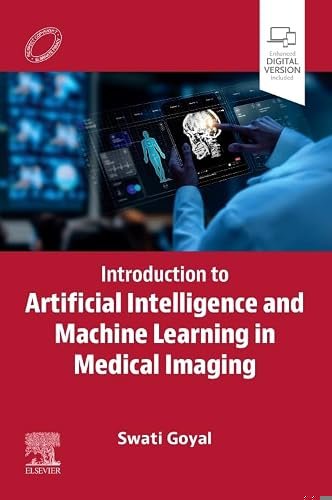 New: Introduction to Artificial Intelligence and Machine Learning in Medical Imaging
Explore by machine type

CT
From energy-integrating to photon-counting detectors

MRI
Helium-light magnets, AI-accelerated sequences and new field strengths

PET
Long axial field of view, digital detectors and theranostics

SPECT
CZT detectors and 360-degree digital designs

X-ray
Digital tomosynthesis, AI detection and new source technology

Ultrasound
Handheld, chip-based probes and AI guidance